
Wake, mayfly
The elemental art of Trương Công Tùng

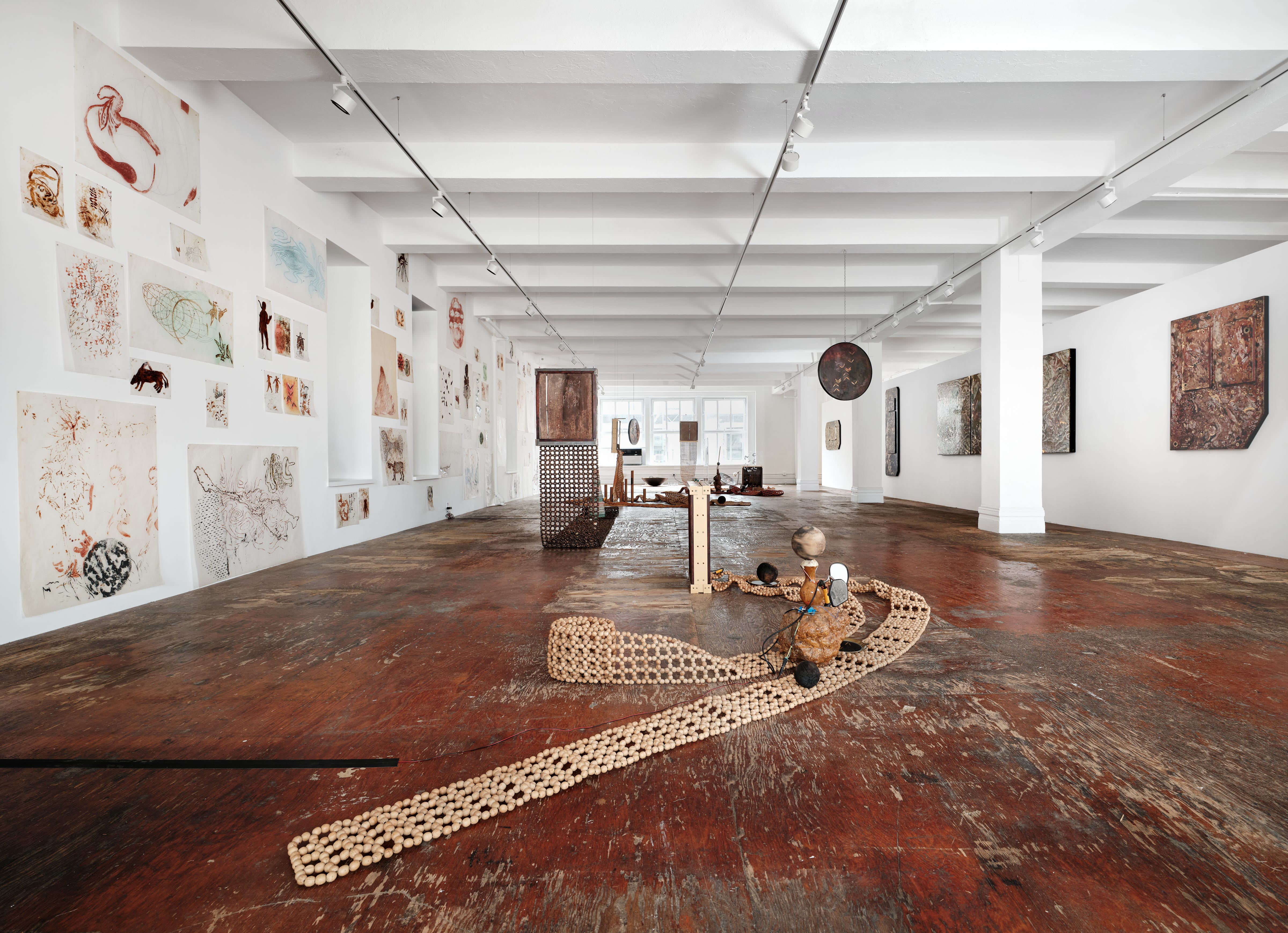
“A dried gourd, a defective hand, a skin, a broken horn, an animal’s tail, a swarm of termites, soil, soul, salt, honey, water, air, light, machines…” This is not a recipe for a magic potion; it is the list of materials in the artwork series When Nothingness Becomes an Echo of Something and Something is an Echo of Nothing (2025-ongoing) by artist Trương Công Tùng. The series, originally conceived for the Bienal de São Paulo, is currently on view alongside three other bodies of the artist’s work at Kiang Malingue’s New York space in Wake, mayfly... Trương’s object labels often include elements such as “air”, “light,” and in his lacquer works, “time.” In a sense, his art represents a confluence between different ways of conceiving the world.
Trương’s work reflects the ongoing clash between wildly disparate cosmological views and belief systems. He grew up in the Central Highlands of Vietnam, a region home to many traditional communities and minority ethnic groups. The area has endured constant transformation over the past several decades, first ravaged by the Vietnam War, and now by the growth of industrial plantation agriculture. This expansion of industrial agriculture has rendered the region “legible” to the state, which can now calculate the area’s economic output and taxable resources by the hectare, but the costs to biodiversity and traditional knowledge are immeasurable.
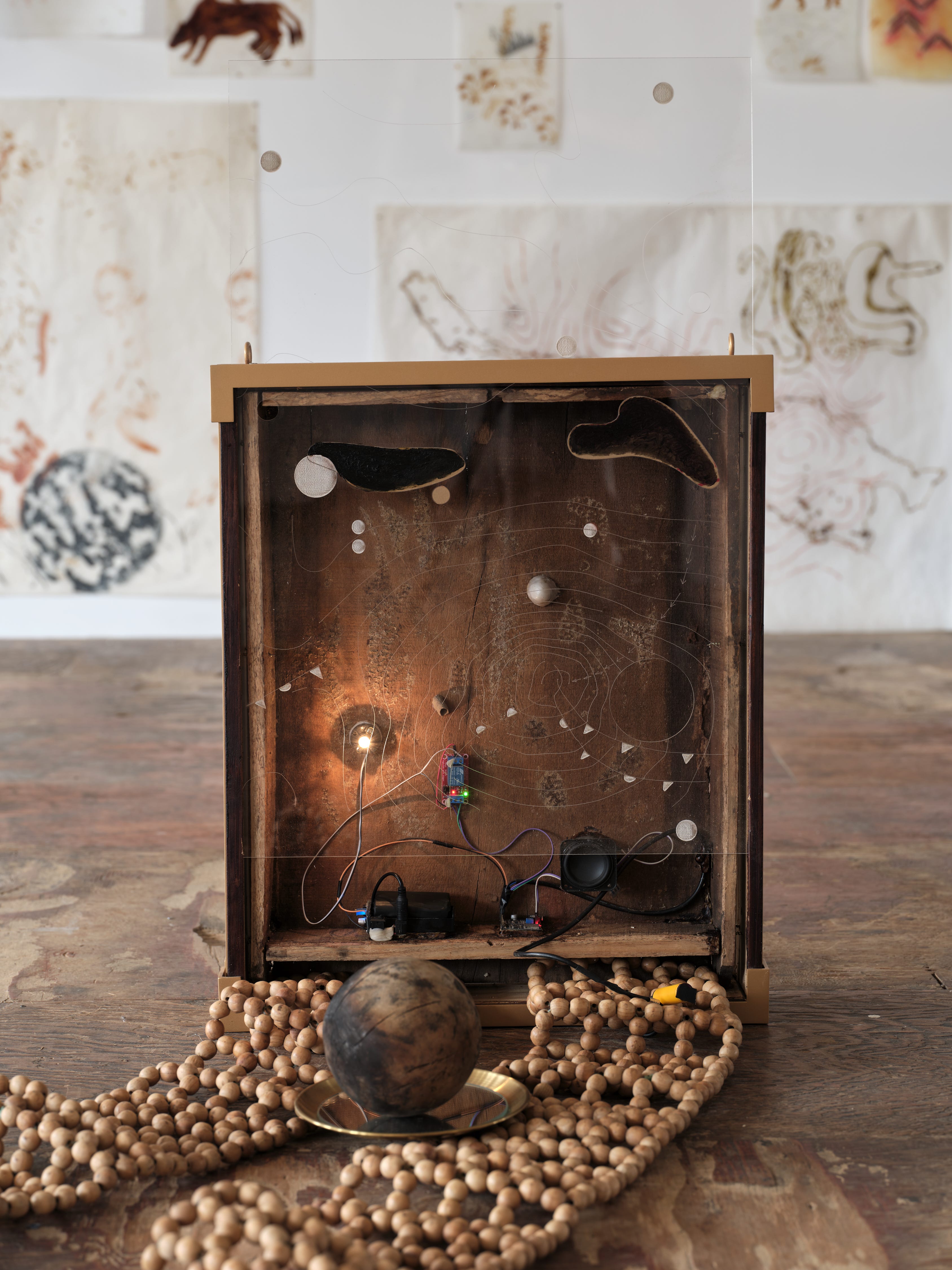
The installations in the When Nothingness Becomes an Echo of Something and Something is an Echo of Nothing series seem to be an attempt to reconcile this collision between worldviews. Each installation features a string or lattice of beads sourced from industrial agriculture plantations, mixed together with various found objects, both natural and manufactured. We see a stack of American and Vietnamese paper bills rolled up and arranged as a traditional offering, the ruins of a termite mound, motorcycle mirrors jutting out of a gnarled tree root, scattered bamboo slats, wires and circuits… Each installation also contains motion sensors that trigger subtle sounds in the works as the viewer approaches: a clank, a creak, a buzz, referencing traditional folk beliefs about deities that reside in inanimate objects and communicate through subtle sounds.
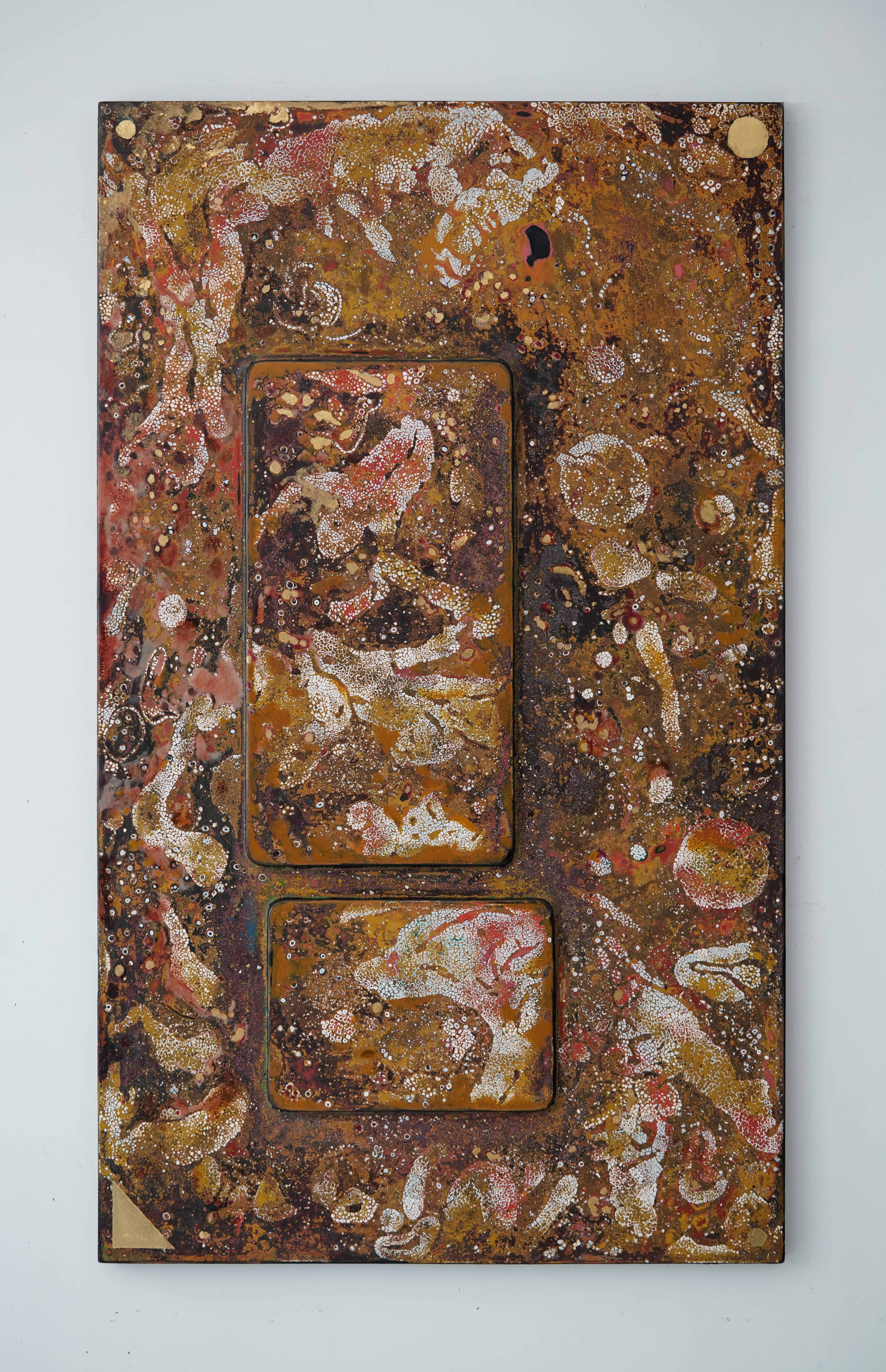
Trương’s collaboration with fundamental elements is also rooted in his background in Vietnamese lacquer painting, which he studied at Ho Chih Minh Fine Arts University. The craft entails the application of repeated layers of natural resin applied alongside various pigments and inlaid materials. The lacquer must be heated to create an opaque layer, and then repeatedly sanded down to reveal the paints, textures, and inlaid eggshell fragments, which emerge like terrazzo. The result is pure primordial chaos. Most of the lacquer works are abstract, collections of swirls recalling cosmic nebulae. The one representational work is a triptych resembling an expansive ancient mural, the swirls coalescing into figures and distant mountains.
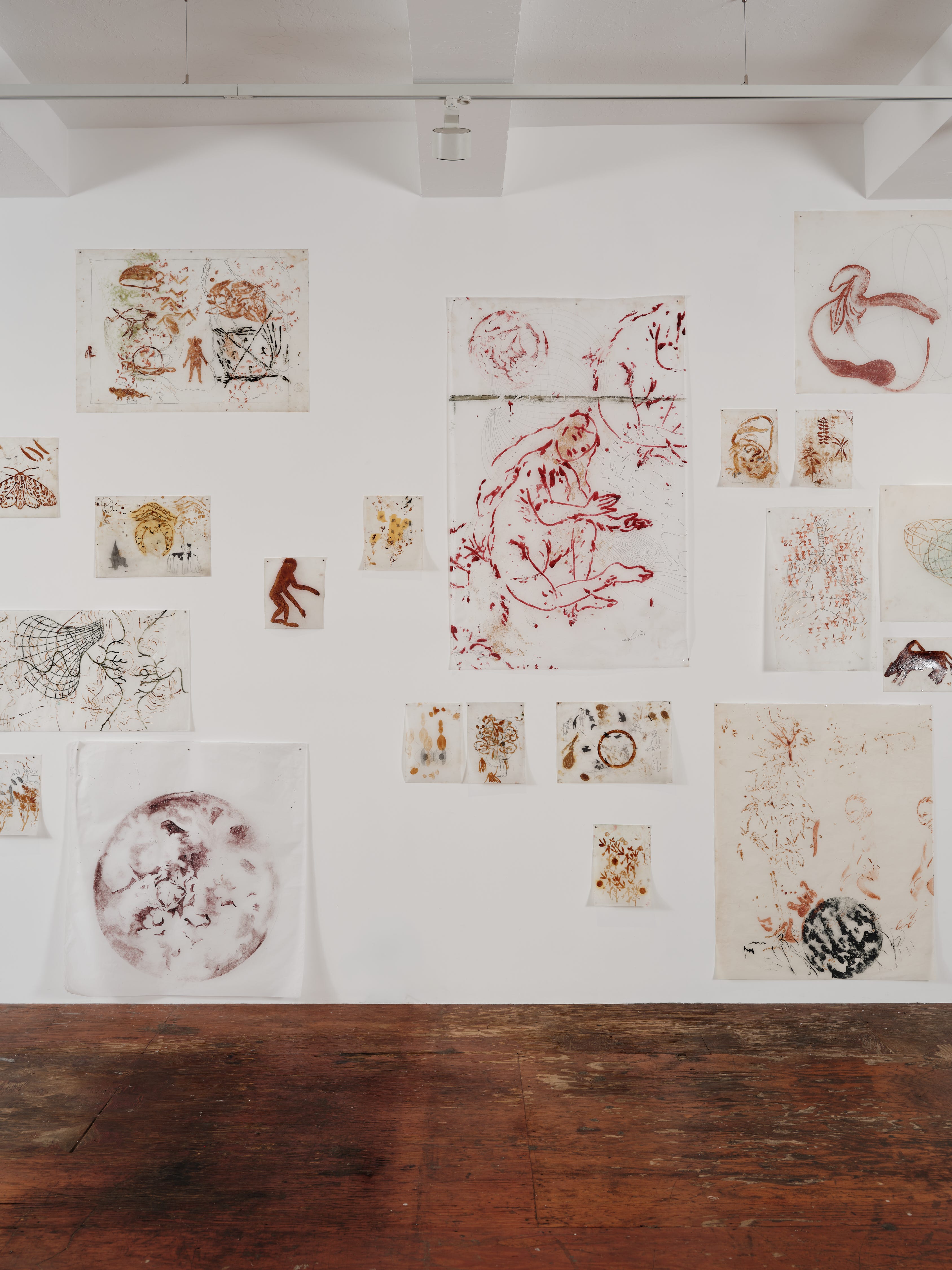
Along the wall are a series of drawings in lacquer, chalk, and pigment on mylar, titled A Breath… A Dream… The simple, earth-toned images both natural and manufactured come together like a cosmic atlas of this world on the boundary between traditional and industrial ways of life, the layering inspired by the slow, methodical process of lacquer painting.
Nestled among the installations are three round lacquer paintings from the Trail Dust series. The name is a reference to the defoliants used by the American military in the Vietnam war. Each painting hangs suspended in the air, the reverse side showing a reflective plexiglass surface. The series is never presented as a whole, and the images are always in flux as they gently sway and twist in the air.
Each of the four series presented in Wake, mayfly is listed as ongoing. The number four is linked to various patterns, from the four seasons, to the stages of human life, or even the four parts of a combustion engine’s cycle. Trương notes, “to me, making art is akin to gardening. Both require labor in a constructive manner. It is an act of care for life and its spiritual values.” It is not a single, definitive statement but a continued cultivation that nourishes and reveals resilience.
Wake, mayfly is on view at Kiang Malingue, 50 Eldridge Street, New York, through June 13.